It was published by Playford in his English Dancing Master (1651). It appears in editions 2 through 11 in G major and in edition 12 in G minor.
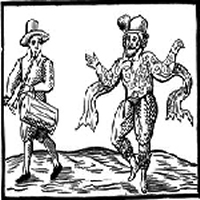
The tune dates to the 16th century and commemorates the feat of Will Kemp, a member and shareholder with William Shakespeare in the Company of the Lord Chamberlain's Men and the Globe Theatre, who bet he could dance a morris jig from London to Norwich (about 125 miles). Kemp was a famous comic actor and clown, and it is likely that Shakespeare wrote some of his early characters with Kemp in mind. Kemp's dancing feat took approximately nine days, spread out over about a month in order that he might rest and recuperate during the journey. He was accompanied by a pipe-and-tabor musician and a referee who kept strict watch that he danced the distance; important as betting was heavy and Kemp put up a considerable sum on himself to complete the distance. His feat, really a publicity stunt of sorts, proved lucrative, for in addition to his winnings he received a pension from Norwich and published a book on his exploit entitled Kemp's Nine Daies Wonder: Performed in a Daunce from London to Norwich: Containing the Pleasure, Paines and Kinde Entertainment of William Kept between London and that Citty in his Late Morrice: Wherein is Somewhat Set Downe Worth Note; to Reproove the Slaunders Spred of Him: Many Things Merry, Nothing Hurtfull. It was first published in London in 1600. Kemp died in 1603.
The tune was printed in Barlow's The Complete Country Dances from Playford's Dancing Master (1985), Barnes' English Country Dance Tunes, vol. 2 (2005) (appears as "Trip to the Manors"), Johnson's The Kitchen Musician No. 14: Songs, Airs and Dances of the 18th Century (1997) and Raven's English Country Dance Tunes (1984).
It was recorded by The Julian Bream Consort on Elizabethan Music.